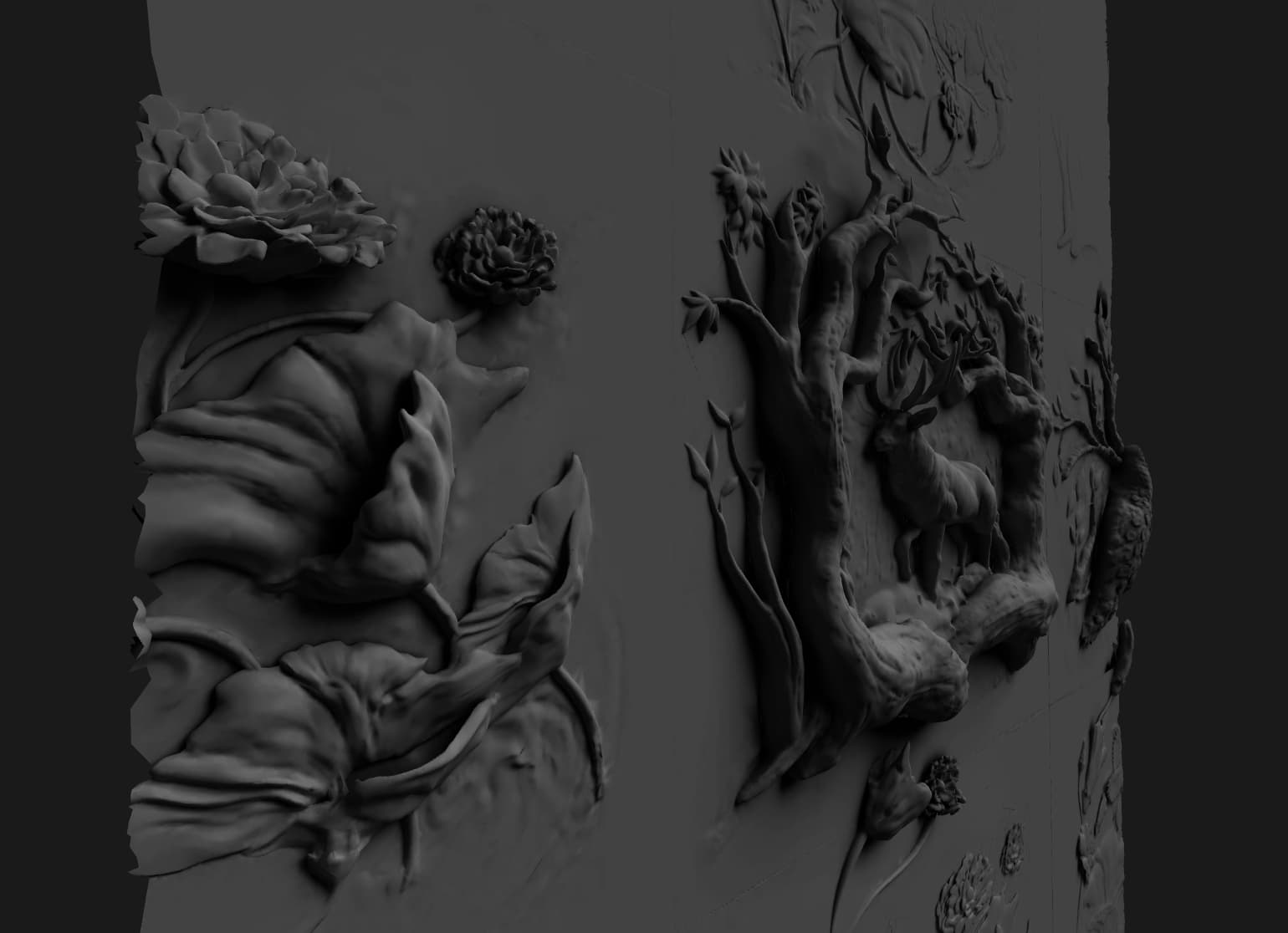
I just wanted to share this experiment is an extrude distortion in the vertex shader on the z axis… the things that are possible with shaders are infinite, literally infinite!
2 Likes
This is one of the coolest things I saw in a while!
2 Likes
Very interesting,
I am curious, Can you talk a bit about how you do something like this? For example what software do you use?
1 Like
You’ve probably heard people say that math isn’t that important for becoming a good developer — well, they’re all lying. This stuff is pure math.
It’s built in Three.js, but the real magic comes from the shaders. GLSL is incredibly challenging; you’re basically working directly with the GPU just like in video games. But the things you can create with it are absolutely insane, as you can see in this example.
The better you are at math — and the more imagination you have — the more you can reshape the visual world. With shaders, you can quite literally create anything you can dream up.
This is the path I’m on now, and the more I learn, the more I get wow’ed. I’m not sure where this journey will lead, but it definitely feels like the right direction — especially considering I love torturing myself by writing code I can barely walk away from once an idea hits me.
I’m planning to create an entire course for Three.js and GLSL — from absolute zero all the way to building a full plugin that will be published on WebBay. I’m sure it will bring in visits and new clients, and honestly, I just want to share this stuff because it’s incredibly cool. Out of every ten developers who try to learn it, nine usually give up simply because they head in the wrong direction. It took me two years to finally get the hang of it once all the light bulbs were lit… This field is hard compared to traditional web development; the context is completely different, and that’s where most devs get stuck. They can’t see the bigger picture, but once you break through that barrier, everything becomes much easier to navigate.
I’ll probably start working on the new course next Spring, and I really hope it turns into a success.
1 Like
I forgot to mention this is how the shader looks https://www.shadertoy.com/view/3fVyDw
Neat, thanks for the details! Shaders really go above my head, but I will start out by playing with three-js for a bit.
It is a monster and is not just about three.js, I advise you to start with Blender so that you understand how a 3d model is formed, the logic behind it, otherwise it will be difficult to understand things… You don’t need to learn to sculpt models or create, but you need to understand how a 3d model is formed before you can modify it with code in Three.js
If you are not serious about this, don’t go into it. You need at least six months to kinda understand, there are devs that are doing threejs for 20 years, and they feel lost most of the time because it has infinite possibilities, for example, you could build in it GTA7 if you have the skills 
For me, initially I understood the basics, but when it came to coding something I knew nothing, I give up on it twice
Basics are not difficult to create a scene and add stuff in it that is easy, the hard part is when you try to create your own idea, you don’t know which is what But it is a great technology to learn if you are tired of the traditional web dev stuff…
1 Like
It’s very fun stuff. I did play around with 3DS Max some 15 years ago, did some basic models though I wasn’t very good and I gave up. Rendering was super interesting but my computer back then was basically a potato.
I’d love to do something in 3d modelling or JS or game dev - the problem is I don’t really see any good way I could bring value / make something people want to buy.
Yes value for this stuff you need to go really deep, and this takes years, even decades, it’s not an easy niche…
1 Like